
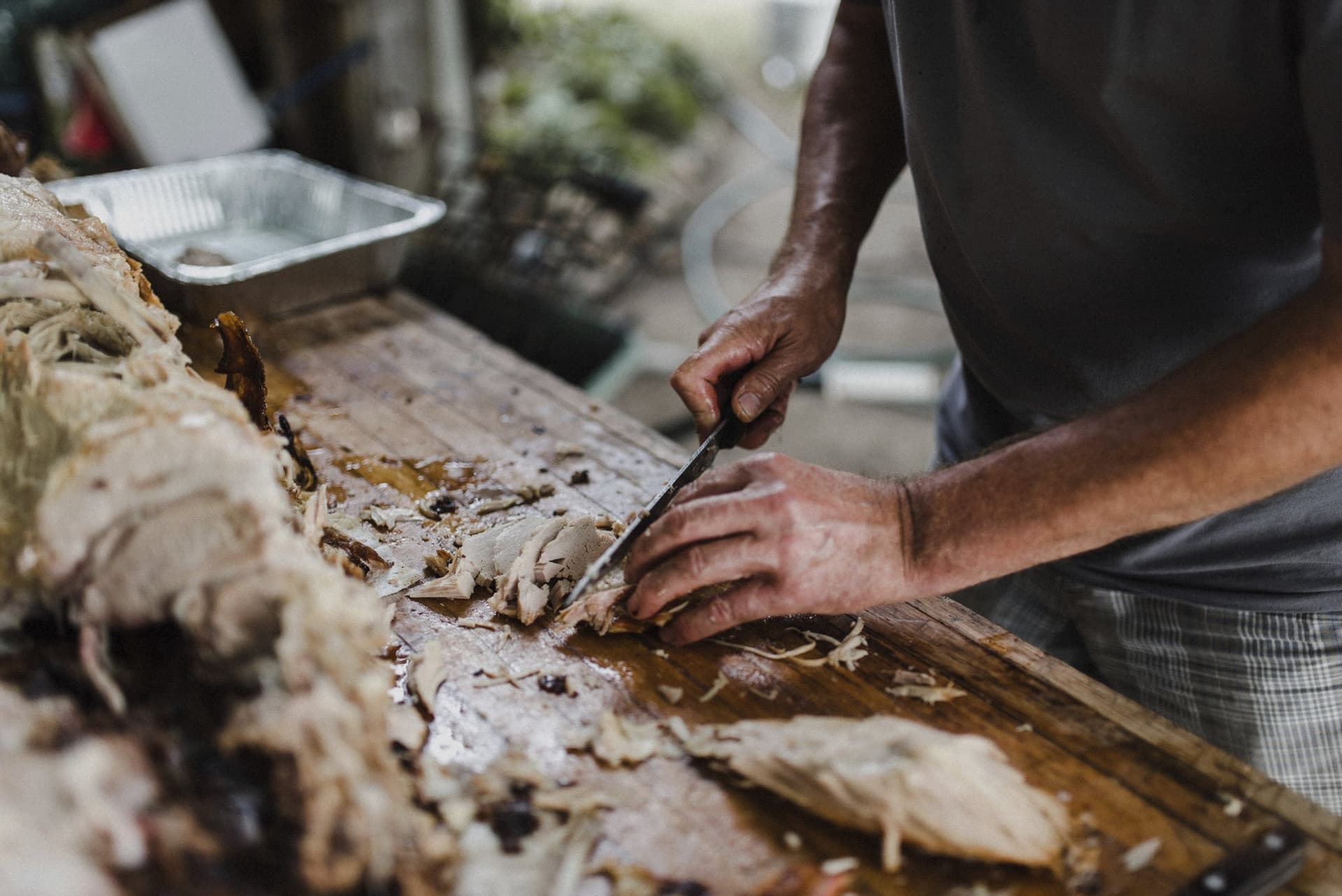
Start with the guests, not the pig
You'll find all sorts of confident numbers online for how many people one pig will feed. Some are sensible, some are wildly optimistic, and almost all of them skip the things that actually decide the answer. A pig isn't a fixed unit. They vary in size, the yield of carved meat varies with them, and a portion at a lunchtime corporate event looks nothing like a portion at the tail end of a wedding.
So we work the other way round. You tell us how many people are eating and what the food is for, and we size the roast (and the rest of the menu) to fit. That's standard practice among experienced hog roast caterers, and it's the only way to avoid either running short or paying for a mountain of leftovers.
Five things that decide how far a hog roast goes
Size of the pig
Pigs come in a range of sizes, and the amount of carved meat rises with them. It's one variable among several, not the whole answer.
Rolls or plates
Pork in a soft roll with stuffing and apple sauce uses less meat per person than a plated meal where the pork is the centrepiece.
Main meal or evening food
A wedding breakfast or an event's only meal needs full portions. Evening food after a big dinner is a lighter, one-roll affair for most guests.
What else is served
Generous salads, potatoes and fries carry some of the load. A second main such as lamb or a BBQ selection spreads it further.
Who's eating
A rugby club's end-of-season do eats differently from a christening. Children, age mix and how long guests have been drinking all play a part.
How caterers actually plan quantities
When an enquiry comes in, the first thing we look at is the headcount and the role the food plays. From there we think in portions: how much carved pork per person for this style of serving, plus sensible quantities of rolls, sides and sauces. The size of the roast follows from that.
We also allow for the realities of service. Some guests come back for seconds; some skip the meat for the veggie option; some arrive late. A well-planned roast has a margin built in so the last guest in the queue gets the same plate as the first.
At larger events, one pig may not be the right answer. It can make more sense to roast two, or to pair the pork with a second main, than to stretch a single roast. That's a planning decision we'll talk through with you, and it depends as much on your venue and service times as on the numbers.

The same guest list, different appetites
An illustration of how the purpose of the food changes the plan for, say, around 120 guests. No figures, because the point is the direction of travel.
| Scenario | Typical serving style | What that means for quantities |
|---|---|---|
| Wedding breakfast (main meal) | Plated or buffet with several sides | Full portions of meat and sides; the roast is sized generously. |
| Wedding evening food | Rolls from the carving counter | Lighter portions, and not every guest eats. Plan for the evening headcount, including day guests who stay. |
| Corporate lunch | Rolls or a plate with salad, served in a window | Moderate portions; strong demand for veggie options. See corporate catering. |
| Garden party or birthday | Rolls with a couple of salads | Depends heavily on the crowd and whether there's other food. Talk it through. |
| Sports club or festival-style | Rolls, often with fries | Hearty appetites; seconds are common. |
When to add lamb or a BBQ alongside
Some events benefit from more than one main. If you've got a mixed crowd, a second option means guests who don't eat pork (for religious, cultural or personal reasons) have a proper meal rather than an afterthought. A lamb roast sits beautifully alongside pork at a wedding or family celebration, and our pork vs lamb guide covers how the two compare.
A small BBQ selection (chicken, burgers, halloumi, veggie burgers) is another good pairing, especially for families with children or for longer events where food is served across the afternoon. It also takes pressure off the carving counter, because guests split between two serving points.
Getting your numbers right
A few habits that make portion planning much easier for you and your caterer.
- Count adults and children separately; young children rarely eat a full portion.
- For weddings, give day and evening numbers separately, and note how many day guests are staying on.
- Tell us about other food on the day, such as canapés, a sit-down meal or a dessert table.
- Give dietary numbers for vegetarian, vegan and other requirements so we cook the right amount of each.
- Be honest about the crowd. Hungry teams and sports clubs need planning differently from an afternoon tea crowd.
- Confirm final numbers by the date your caterer asks for, not on the morning.
Portion questions
Can you give me a rough idea of how many one pig feeds?
Pigs vary in size, and the answer changes with how the pork is served and what else is on the menu. Rather than quote a number that might not fit, we size the roast to your headcount. Tell us about your event and we'll recommend what you need.
What happens if more people turn up than expected?
A well-planned roast has some margin built in, and sides and rolls stretch further than you might think. But if numbers have grown significantly, tell us before the day so we can adjust.
Do I need to feed every evening guest?
Not everyone eats at evening receptions, especially after a large wedding breakfast, but it's better to plan for most of them. We'll help you judge it based on the day's timings.
Is a whole pig overkill for a small party?
Not necessarily. For smaller groups we'll recommend an appropriately sized roast, or suggest a BBQ or mixed menu if that suits the event better. See our private party catering page.